If you own a decent block in Melbourne, there’s a fair chance it’s working harder for the neighbourhood than it is for you. Plenty of owners sit on one ageing house for years without asking the obvious question: could this land hold two homes?
That missed question is costly. Land is usually the biggest expense in any build, so every unused square metre is money left on the table. The right duplex builders Melbourne owners can trust turn that same block into two dwellings, two rental incomes, or one home for you and one for family.
Here’s how to approach it with clear eyes, whether you’re in the growth corridors around Craigieburn or an established suburb closer in.
What Separates Reliable Duplex Builders in Melbourne from the Rest?
It’s rarely the glossy brochure. It’s whether a builder understands your block, your goal and your timeline before they quote a price. Here are six things worth weighing.
1. Block Assessment Before Anything Else
This is the groundwork: checking lot size, frontage, zoning, easements and overlays. It matters to anyone buying a block or already holding one. Rules vary between councils, and a block that looks generous can still fall short of carrying two dwellings. A corner block, for instance, often handles two driveways far more easily than a narrow interior lot. Ask any of the duplex builders in Melbourne you’re considering how they assess feasibility before design begins.
2. Side-by-Side Duplex Designs
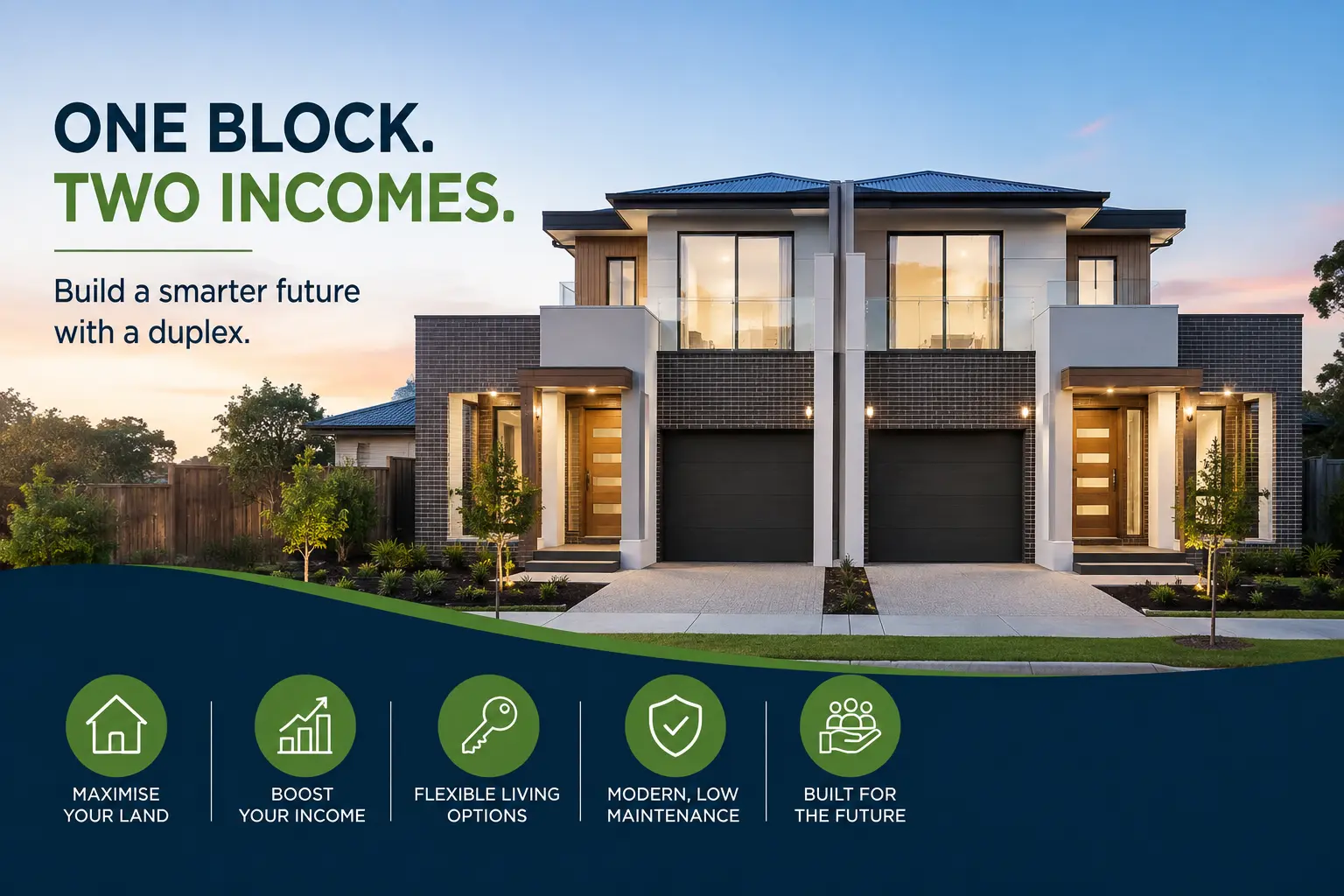
Two homes share a central wall, each with its own frontage, entry and backyard. This suits wider blocks and owners who want both homes to feel like proper standalone houses. Street presence is strong, and each home is simple to rent or sell. Picture a wide block split into two mirrored three-bedroom homes with matching finishes. On an even wider block, triplex homes may also be worth a look.
3. Front-and-Back Layouts
One home sits at the front, the other behind, sharing a driveway. It’s a clever answer for long, narrow blocks common in established suburbs. The payoff is using depth rather than width. The catch is privacy, so thoughtful window placement and courtyards do the heavy lifting.
4. Double-Storey Duplex Homes
Stacking living and bedrooms across two levels gives each dwelling more floor area on a smaller footprint. Families love the separation between noisy and quiet zones. Investors like the extra bedrooms, which can lift rental appeal. Think open-plan living downstairs flowing to the yard, with bedrooms upstairs. This guide to key design considerations for double-storey homes is a useful starting point.
5. Investor-Focused Duplex Builds
These are designed around tenants first: practical floor plans, modern kitchens, low-maintenance yards. Newly built homes tend to rent faster and cost less to maintain than older stock. Builders working in Craigieburn’s growth estates often see investors use one duplex’s rental income to fund their next project sooner than planned. That’s the real appeal of dual occupancy.
6. Owner-Occupier and Family Duplexes
Live in one home and rent the other, or keep family close with independence on the same title. It’s popular with downsizers, multigenerational households and first-time builders. Imagine parents moving into one dwelling while adult children live next door. You get connection without sharing a kitchen.
Conclusion
A duplex isn’t just a build. It’s a decision about what your land does for you over the next few decades. Get the block assessment, layout and builder right, and you gain income, flexibility and confidence.
If you’re weighing it up, talk to duplex builders Melbourne owners recommend and ask how they handle planning checks, design and handover. A team like Dream Villa Homes can walk you through the options for your block and your goals.
FAQs
How much land do I need for a duplex in Melbourne?
There’s no single minimum. It depends on zoning, frontage, council requirements and any overlays. A feasibility check on your specific block is the first step.
Do I need a planning permit?
In most cases, yes. Dual occupancy generally needs council planning approval. Your builder or council can confirm what applies to your site.
Can I sell each duplex separately?
Usually that requires subdivision, which is a separate process. Raise it early so your design and approvals support it.
Is a duplex better than a single new home for investment?
It can be, because one land purchase supports two incomes. Build costs and approvals are higher, so it depends on your budget and goals. This guide to buying an investment property in Melbourne covers the wider picture.
How long does a duplex build take?
Timelines vary with approvals, design complexity and weather. Ask your builder for a written schedule that separates planning from construction.